Muay Thai and kickboxing get lumped together constantly. Both are striking arts, both are fought standing up and from a distance, they can look almost identical. But train in either for even a short time and the differences become obvious, from the technique, strategy, rhythm and the kind of fighter each discipline produces. If you’ve been trying to figure out which is which, here’s a clear breakdown.
The Most Important Difference Between the Two
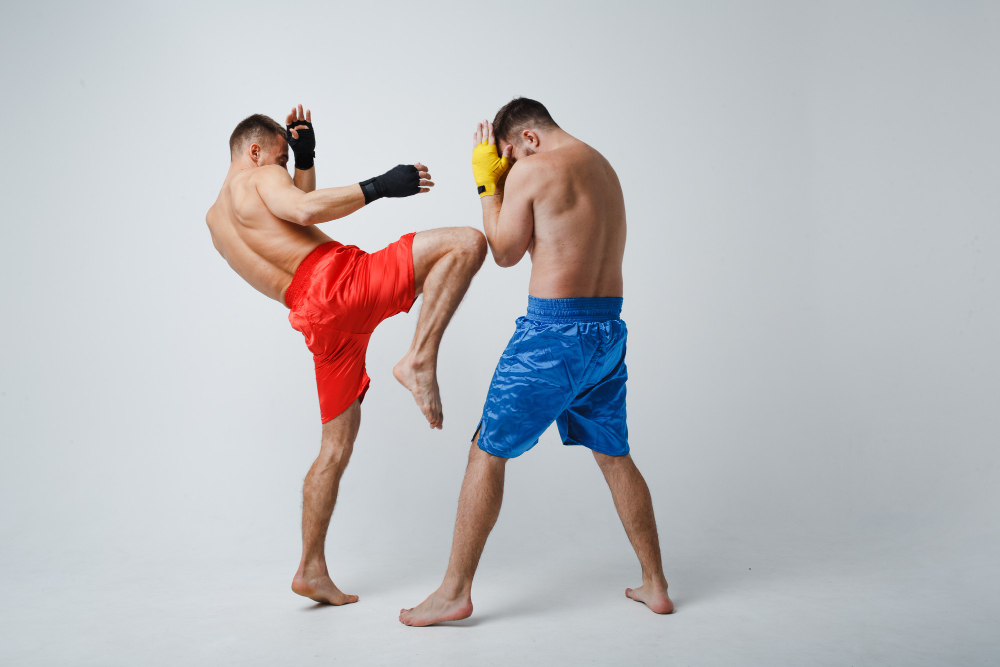
Muay Thai is known as the “Art of Eight Limbs” whereby fighters can strike with punches, kicks, knees, and elbows, with eight points of contact compared to the four most martial arts use. That alone makes it a fundamentally different sport. Add in the clinch, where fighters grab, pivot, off-balance and land knees at close range plus sweeps and trips, and you have a striking system with genuine depth at every distance.
Kickboxing strips much of that away as most rule sets allow punches and kicks only. Elbows are out, the clinch is heavily restricted, and when fighters do tie up, the referee typically steps in quickly to separate them. It’s a cleaner, faster sport but also a narrower one.
That single distinction of what each sport allows is what drives every other difference between them.
How They Look in the Ring
Because Muay Thai fighters have to manage threats from eight directions at close, mid and long range, the sport has a more measured pace. Fighters are patient. They read posture, manage distance carefully and wait for clean openings rather than throwing high volume combinations. A single well timed elbow or knee can change a fight, so taking risks carelessly carries a real cost.
Kickboxing moves faster and rewards aggression, with fighters operating almost entirely at mid-range, chaining combinations together continuously. The emphasis is on speed, movement and output. Essentially fighters who stay busy and mix their attacks tend to dominate.
Watching both side by side, Muay Thai looks more like a strategic exchange while kickboxing looks more like a fast, flowing combination sport. Both demand high levels of skill, they’re just applied very differently.
How Each Sport Is Scored
Scoring reflects the techniques each sport values. In Muay Thai, judges prioritise impact and composure. A clean body kick that visibly hurts the opponent scores heavily. So does landing strikes from a position of balance and control, or successfully sweeping an opponent off their feet. Throwing lots of shots doesn’t win rounds on its own as judges want to see quality, dominance and damage.
Kickboxing judges reward volume and pressure with consistent forward movement, clean contact and the ability to mix levels and stay aggressive all score well. Activity matters more here, which is why the pace of kickboxing is higher, fighters are always working to accumulate points.
Why Muay Thai Is Often the More Complete Striking Art
Muay Thai is built for every range. At distance, leg and body kicks are devastating and difficult to check consistently. At mid-range, punches and head kicks come into play. Up close (where most sports fall apart) Muay Thai fighters are armed with elbows and knees, and trained to control the clinch rather than tie up and wait for the referee. Sweeps and trips extend that close range game further, demanding balance and body awareness that other striking arts rarely develop.
The result is a martial art that produces fighters who are genuinely difficult to deal with wherever a fight ends up. That versatility is why Muay Thai has become a core component of MMA, and why so many combat sports athletes regardless of their primary discipline, spend serious time training it.
Train with the Best
Bangkok is where Muay Thai was shaped, refined and tested against the best in the world. And at Marrok Group we train it seriously, whether you’re stepping into a gym for the first time or preparing to compete. Our coaches will develop your technique from the ground up, across every range and every weapon the sport has to offer. So if you want to understand what makes Muay Thai different, the best way is to experience it yourself.